
Data is the foundation of every modern business. Organizations collect information from websites, mobile applications, ERP systems, CRM platforms, IoT devices, financial systems, and many other sources. However, raw data is rarely ready for reporting, analytics, or artificial intelligence. It must first be collected, cleaned, transformed, validated, and delivered to a platform where business users can trust it.
Databricks provides one of the most powerful environments for building scalable Extract, Transform, and Load (ETL) pipelines. By combining Apache Spark, Delta Lake, workflow orchestration, and cloud-native scalability, Databricks enables organizations to process everything from small business datasets to petabytes of enterprise data.
However, simply building an ETL pipeline is not enough.
Poorly designed pipelines can become expensive, difficult to maintain, slow to run, and unreliable as data volumes grow. Organizations that follow proven best practices create pipelines that are easier to scale, easier to monitor, and capable of supporting analytics, machine learning, and AI initiatives for years to come.
In this guide, we will explore the best practices for Databricks ETL Pipelines, common mistakes to avoid, and how organizations can build reliable data engineering solutions using the Databricks Lakehouse Platform.
- What Are Databricks ETL Pipelines?
- Why ETL Pipelines Matter
- Design Pipelines Around Business Requirements
- Build Using the Medallion Architecture
- Use Delta Lake for Reliability
- Automate Data Quality Checks
- Process Only Changed Data
- Optimize Apache Spark Jobs
- Build Modular Pipelines
- Use Databricks Workflows for Orchestration
- Monitor Pipeline Performance
- Implement Logging and Error Handling
- Secure Your Data
- Implement Unity Catalog
- Version Control Your ETL Code
- Build Pipelines That Support AI
- Common Mistakes to Avoid
- Why Databricks Is an Excellent Platform for ETL
- How Tenplus Helps Organizations Build Databricks ETL Pipelines
- Conclusion
- FAQs
What Are Databricks ETL Pipelines?
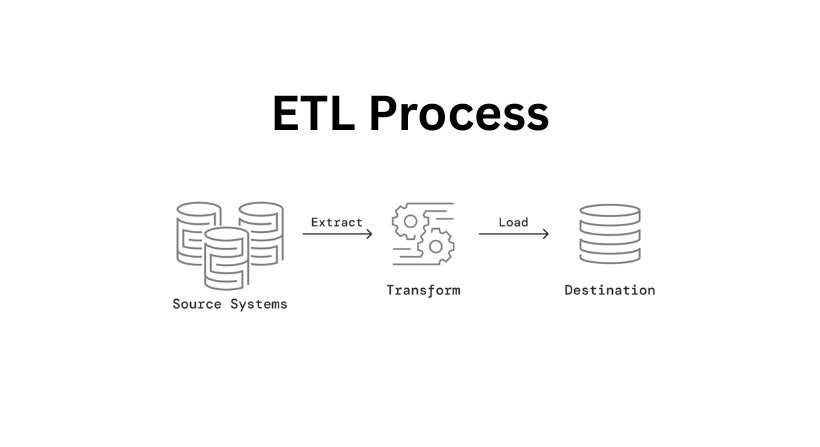
ETL stands for Extract, Transform, and Load.
An ETL pipeline collects data from one or more sources, transforms it into a clean and consistent format, and loads it into a destination where it can be used for reporting, analytics, or AI.
Databricks ETL Pipelines are built using Apache Spark and the Databricks Lakehouse Platform, allowing organizations to process structured, semi-structured, and unstructured data at large scale.
A typical Databricks ETL pipeline may include:
- Extracting data from APIs
- Reading transactional databases
- Processing streaming events
- Cleaning duplicate records
- Standardizing data formats
- Joining multiple datasets
- Validating business rules
- Writing data into Delta Lake
- Making data available for dashboards and AI models
Modern organizations rely on these pipelines every day because accurate analytics depend on reliable data movement.
Why ETL Pipelines Matter
Many business leaders only see dashboards and reports.
Behind every dashboard is a data pipeline that ensures information is accurate and up to date.
When ETL pipelines fail, organizations experience:
- Missing reports
- Incorrect dashboards
- Delayed analytics
- Poor AI performance
- Data quality issues
- Higher cloud costs
A well-designed pipeline becomes the backbone of the organization’s data platform.
Design Pipelines Around Business Requirements
Technology should always support business goals.
Before writing a single line of code, define:
- What business problem the pipeline solves
- Which teams will use the data
- How often the data should refresh
- What level of accuracy is required
- What service level agreements (SLAs) must be met
Understanding these requirements helps prevent unnecessary complexity later.
Quick link: Databricks Launches LTAP: The First Lake Transactional/Analytical Processing Architecture
Build Using the Medallion Architecture
One of the most widely recommended practices in Databricks is using the Medallion Architecture.
This architecture separates data into multiple quality layers.
Bronze Layer
The Bronze layer stores raw data exactly as it arrives from source systems.
No major transformations should occur here.
Keeping raw data allows organizations to replay or reprocess information if necessary.
Silver Layer
The Silver layer cleans and validates the data.
Typical activities include:
- Removing duplicates
- Standardizing formats
- Fixing missing values
- Applying business rules
- Joining related datasets
This layer becomes the trusted operational dataset.
Gold Layer
The Gold layer contains business-ready data optimized for:
- Dashboards
- Executive reporting
- Machine learning
- AI applications
- Customer analytics
Separating these layers improves maintainability and governance.
Use Delta Lake for Reliability
Delta Lake is one of the biggest advantages of Databricks.
Rather than writing directly into standard files, organizations should store processed datasets using Delta tables.
Delta Lake provides:
- ACID transactions
- Schema enforcement
- Schema evolution
- Time travel
- Improved reliability
These features reduce data corruption and improve confidence in analytics.
Automate Data Quality Checks
Many ETL failures originate from poor input data rather than faulty code.
Organizations should automate validation during every pipeline execution.
Examples include:
- Checking for null values
- Validating required fields
- Identifying duplicate records
- Verifying data types
- Monitoring unexpected value ranges
Automated quality checks prevent bad data from reaching downstream systems.
Process Only Changed Data
One of the biggest mistakes organizations make is processing entire datasets every time a pipeline runs.
As data grows, this becomes expensive and slow.
Instead, use incremental processing whenever possible.
Incremental pipelines only process:
- New records
- Updated records
- Deleted records
This reduces compute costs and improves performance.
Optimize Apache Spark Jobs
Databricks is built on Apache Spark.
Well-optimized Spark jobs significantly improve ETL performance.
Some best practices include:
Partition Large Datasets
Proper partitioning allows Spark to process data more efficiently.
Avoid partitions that are too small or too large.
Avoid Unnecessary Shuffles
Data shuffling is one of the most expensive operations in Spark.
Reducing unnecessary joins and repartitioning improves execution speed.
Cache Frequently Used Data
If datasets are reused multiple times within a workflow, caching can reduce processing time.
However, caching should only be used when it provides measurable performance improvements.

Build Modular Pipelines
Large ETL jobs quickly become difficult to maintain.
Instead of creating one massive workflow, divide pipelines into smaller reusable components.
For example:
- Data ingestion
- Data validation
- Transformation
- Aggregation
- Publishing
Modular design simplifies testing and maintenance.
Use Databricks Workflows for Orchestration
ETL pipelines rarely consist of a single task.
Organizations should automate execution using Databricks Workflows.
Workflows help:
- Schedule jobs
- Manage dependencies
- Retry failed tasks
- Monitor execution
- Trigger notifications
Automation reduces manual intervention and improves reliability.
Monitor Pipeline Performance
Building a pipeline is only the beginning.
Organizations should continuously monitor:
- Job duration
- Compute usage
- Failure rates
- Data freshness
- Processing latency
Monitoring helps identify performance issues before users notice them.
Implement Logging and Error Handling
Every ETL pipeline should produce meaningful logs.
Good logging helps teams understand:
- Which step failed
- Why the failure occurred
- Which records were affected
- How to recover
Clear logging significantly reduces troubleshooting time.
Secure Your Data
Security should be integrated throughout the pipeline.
Best practices include:
- Encrypt sensitive information
- Use role-based access control
- Protect secrets using secret management
- Apply least privilege access
- Audit pipeline activity
Security becomes even more important when pipelines process customer or financial information.
Implement Unity Catalog
Organizations using Databricks should manage governance through Unity Catalog.
Unity Catalog provides:
- Centralized permissions
- Data lineage
- Metadata management
- Auditing
- Fine-grained security
This improves consistency across multiple workspaces and simplifies governance.
Version Control Your ETL Code
Data pipelines evolve over time.
Version control allows teams to:
- Track changes
- Roll back mistakes
- Collaborate effectively
- Support CI/CD deployments
Git integration has become a standard practice for enterprise Databricks projects.
Build Pipelines That Support AI
Modern ETL pipelines are no longer built only for reporting.
They increasingly support:
- Machine learning
- Predictive analytics
- Generative AI
- AI agents
This means pipelines should deliver:
- Clean data
- Consistent schemas
- Reliable metadata
- Governed access
Strong ETL pipelines create strong AI foundations.
Common Mistakes to Avoid
Even experienced teams can introduce unnecessary complexity.
Some of the most common mistakes include:
Ignoring Data Quality
Bad input data produces unreliable analytics.
Always validate incoming data.
Processing Everything Every Time
Incremental processing is almost always more efficient than full refreshes.
Weak Governance
Without governance, organizations struggle with permissions, compliance, and trust.
Implement governance early rather than later.
Overcomplicated Transformations
Simple, readable code is easier to maintain than highly complex transformations.
Lack of Monitoring
Pipelines should never operate without visibility into performance and failures.
Monitoring is essential for long-term reliability.
Why Databricks Is an Excellent Platform for ETL
Databricks combines several capabilities that make it ideal for enterprise ETL.
These include:
- Apache Spark
- Delta Lake
- Auto Scaling
- Workflows
- Unity Catalog
- Machine Learning support
- Multi-cloud deployment
- Lakehouse architecture
Together, these capabilities enable organizations to build scalable pipelines that support both analytics and AI.
Quick link: A Guide to Data Governance Frameworks
How Tenplus Helps Organizations Build Databricks ETL Pipelines
Building enterprise-grade ETL pipelines requires much more than technical implementation.
Organizations need architecture that supports business growth, governance, cost optimization, and future AI initiatives.
The Tenplus team helps organizations:
- Design modern Lakehouse architectures
- Build scalable ETL pipelines
- Implement Delta Lake
- Deploy Unity Catalog
- Optimize Spark performance
- Reduce Databricks costs
- Improve data quality
- Build AI-ready data platforms
Rather than focusing only on pipeline development, Tenplus creates complete data engineering solutions that align with long-term business objectives.
Tenplus also offers a free proof of concept, allowing organizations to validate architecture and pipeline strategies before making larger investments.
Conclusion
Databricks ETL Pipelines play a critical role in modern data platforms. They ensure that raw information becomes trusted, business-ready data that supports reporting, analytics, machine learning, and artificial intelligence.
Following best practices such as using Medallion Architecture, Delta Lake, Unity Catalog, incremental processing, automated quality checks, and strong governance helps organizations build pipelines that are scalable, secure, and cost-efficient.
As businesses continue investing in AI and advanced analytics, the importance of reliable ETL pipelines will only continue to grow.
If your organization is planning a Databricks implementation, modernizing existing pipelines, or building an AI-ready data platform, Tenplus can help design and implement a scalable ETL architecture that delivers measurable business value today while supporting future innovation.
FAQs
What are Databricks ETL Pipelines?
Databricks ETL Pipelines extract, transform, and load data using Apache Spark and the Databricks Lakehouse Platform for analytics and AI.
Why should I use Delta Lake for ETL?
Delta Lake provides ACID transactions, schema enforcement, time travel, and better reliability than traditional data lakes.
What is the Medallion Architecture?
The Medallion Architecture organizes data into Bronze, Silver, and Gold layers to improve data quality, governance, and maintainability.
How does Unity Catalog improve ETL pipelines?
Unity Catalog centralizes governance by managing permissions, metadata, data lineage, and security across Databricks workspaces.
How can Tenplus help with Databricks ETL Pipelines?
Tenplus helps organizations design, optimize, and manage Databricks ETL Pipelines with modern Lakehouse architecture, governance, performance optimization, and AI-ready data engineering.



4 Responses