
Data is a key part of how modern companies operate. Teams use data to track performance, understand customers, and improve decisions. As data grows, companies need systems that can process large volumes quickly and reliably.
This is where tools like Apache Spark and Databricks come in.
Many business leaders hear these names often but are not always clear on what they mean or how they differ. This creates confusion during decision-making, especially when choosing the right platform for data and AI projects.
In this blog, we will explain Spark vs Databricks in simple terms. We will focus on what each one does, how they work together, and what this means for your business.
- What Is Apache Spark
- What Is Databricks
- Spark vs Databricks: Key Differences
- Why This Difference Matters for Business Leaders
- When Should You Use Apache Spark
- When Should You Use Databricks
- How Spark and Databricks Work Together
- Real-World Example
- Common Mistakes Companies Make
- The Role of Data Foundations
- How Tenplus Helps Organizations Choose and Implement the Right Approach
- Conclusion
- FAQs
What Is Apache Spark
Apache Spark is an open-source data processing engine. It is designed to process large datasets quickly across multiple machines.
In simple terms, Spark is the core technology that allows companies to:
- Process large volumes of data
- Run analytics and transformations
- Support machine learning workloads
- Handle both batch and streaming data
Spark is widely used because it is fast and flexible. It can work with different data sources and can be deployed on various cloud platforms or on-premise systems.
However, Spark by itself is not a complete solution.
It is an engine, not a full platform.
What Is Databricks
Databricks is a unified data platform built on top of Apache Spark.
It takes the core capabilities of Spark and adds a complete environment around it. This includes tools for data engineering, analytics, machine learning, and governance.
Databricks simplifies the process of working with Spark by providing:
- Managed infrastructure
- Built-in collaboration tools
- Integrated data pipelines
- Security and governance features
- Support for real-time and batch processing
In simple terms, if Spark is the engine, Databricks is the full system that makes the engine usable at scale.
Spark vs Databricks: Key Differences
Understanding the difference between Spark and Databricks is important for business leaders.
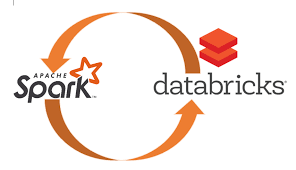
Spark and Databricks are not competitors. They are part of the same ecosystem. Databricks is built on Spark.
However, they differ in how they are used.
Key differences include:
1. Scope
- Spark is a data processing engine
- Databricks is a complete data platform
2. Setup and Management
- Spark requires manual setup and infrastructure management
- Databricks provides a managed environment
3. Ease of Use
- Spark requires more technical expertise
- Databricks simplifies usage with built-in tools
4. Collaboration
- Spark does not include collaboration features
- Databricks allows teams to work together in one environment
5. Security and Governance
- Spark requires additional setup for security
- Databricks includes built-in governance features
These differences make Databricks more suitable for organizations that want a complete and scalable solution.
Why This Difference Matters for Business Leaders
For technical teams, the difference between Spark and Databricks may seem clear. For business leaders, the impact is more practical.
Choosing between Spark and Databricks affects:
- Speed of project delivery
- Cost of infrastructure
- Ease of scaling systems
- Ability to collaborate across teams
- Reliability of data systems
If a company uses Spark alone, it needs to manage infrastructure, security, and scaling manually. This requires more time and technical resources.
With Databricks, these challenges are handled within the platform. This allows teams to focus on building solutions instead of managing systems.
Quick link: Databricks SQL Explained for Business Leaders
When Should You Use Apache Spark
Apache Spark is a good choice in certain situations.
It is often used when:
- Companies want full control over infrastructure
- Teams have strong engineering expertise
- There are custom or specialized use cases
- Cost optimization is managed internally
However, using Spark alone requires significant effort in setup, maintenance, and scaling.
When Should You Use Databricks
Databricks is a better fit for most modern organizations.
It is designed to simplify data and AI workflows while providing scalability and reliability.
Databricks is ideal when:
- Companies want faster time to value
- Teams need a unified platform for data and AI
- There is a need for collaboration across teams
- Data systems need to scale quickly
- Governance and security are important
For most businesses, Databricks reduces complexity and improves efficiency.

How Spark and Databricks Work Together
It is important to understand that Databricks uses Spark as its core engine.
This means companies do not lose the benefits of Spark when they use Databricks. Instead, they gain additional capabilities.
Databricks builds on Spark by adding:
- Better performance through optimization
- Easier management of clusters
- Integrated tools for analytics and AI
- Improved user experience
This combination allows companies to use the power of Spark without dealing with its complexity.
Real-World Example
Consider a company that wants to analyze customer data.
Using Spark alone, the company would need to:
- Set up infrastructure
- Configure clusters
- Build data pipelines
- Manage scaling and performance
This can take weeks or even months.
With Databricks, the company can:
- Start quickly with a managed environment
- Build pipelines using integrated tools
- Analyze data in real time
- Scale easily as data grows
This reduces time and effort while improving results.
Common Mistakes Companies Make
Many companies face challenges when choosing between Spark and Databricks.
Common mistakes include:
- Treating Spark and Databricks as direct competitors
- Choosing tools without understanding business needs
- Ignoring the cost of managing infrastructure
- Focusing on technology instead of outcomes
These mistakes can lead to delays and increased costs.
The key is to choose the approach that aligns with business goals and capabilities.
The Role of Data Foundations
No matter which tool is used, success depends on the quality of the data.
Without clean and structured data, even the best platforms cannot deliver reliable results.
Companies need to focus on:
- Data quality
- Data structure
- Data governance
This is where many projects fail.
Tools are important, but structure is critical.
How Tenplus Helps Organizations Choose and Implement the Right Approach
Choosing between Spark and Databricks is not just a technical decision. It is a business decision.
Tenplus helps organizations understand their needs and build the right data systems.
The focus is on creating strong data foundations and selecting tools that support business goals.
Tenplus supports organizations by:
- Designing data architectures that scale
- Building data pipelines using Spark and Databricks
- Ensuring data quality and governance
- Enabling analytics and AI solutions
Tenplus takes a practical approach, focusing on real outcomes instead of theoretical models.
The team works closely with clients to ensure that systems are built correctly and deliver value.
Tenplus also offers a free proof of concept, allowing companies to test solutions before making large investments.
Conclusion
Understanding Spark vs Databricks is important for any organization working with data.
Spark is a powerful engine that enables large-scale data processing. Databricks builds on this engine to provide a complete platform that simplifies data and AI workflows.
For most businesses, Databricks offers a faster and more efficient way to build scalable data systems.
However, the real success of any data project depends on how the system is designed and implemented.
Tenplus helps organizations make the right decisions and build systems that work in real environments.
If you are looking to choose between Spark and Databricks or want to build a scalable data platform, Tenplus can help you design and implement the right solution.
With a strong focus on data foundations and a free proof of concept, Tenplus helps companies turn data into real business value.
FAQs
What is the main difference between Spark and Databricks?
Spark is a data processing engine, while Databricks is a complete platform built on top of Spark.
Is Databricks better than Spark?
Databricks is not a replacement for Spark. It enhances Spark by adding tools and simplifying usage.
Do companies still use Spark without Databricks?
Yes, but it requires more effort to manage infrastructure and scaling.
Which is better for business use, Spark or Databricks?
Databricks is usually better for businesses because it is easier to use and faster to deploy.
How can Tenplus help with Spark and Databricks?
Tenplus helps design and implement data platforms using Spark and Databricks, ensuring scalability and real results.



One Response